Fluoride is one of the most effective tools we have for preventing tooth decay in children. However, using the correct amount is essential — too little means inadequate protection, while too much can lead to fluorosis, a condition that causes white spots on developing teeth. As a pediatric dentist in Dubai, I guide parents through these guidelines every day.
Why Fluoride Matters
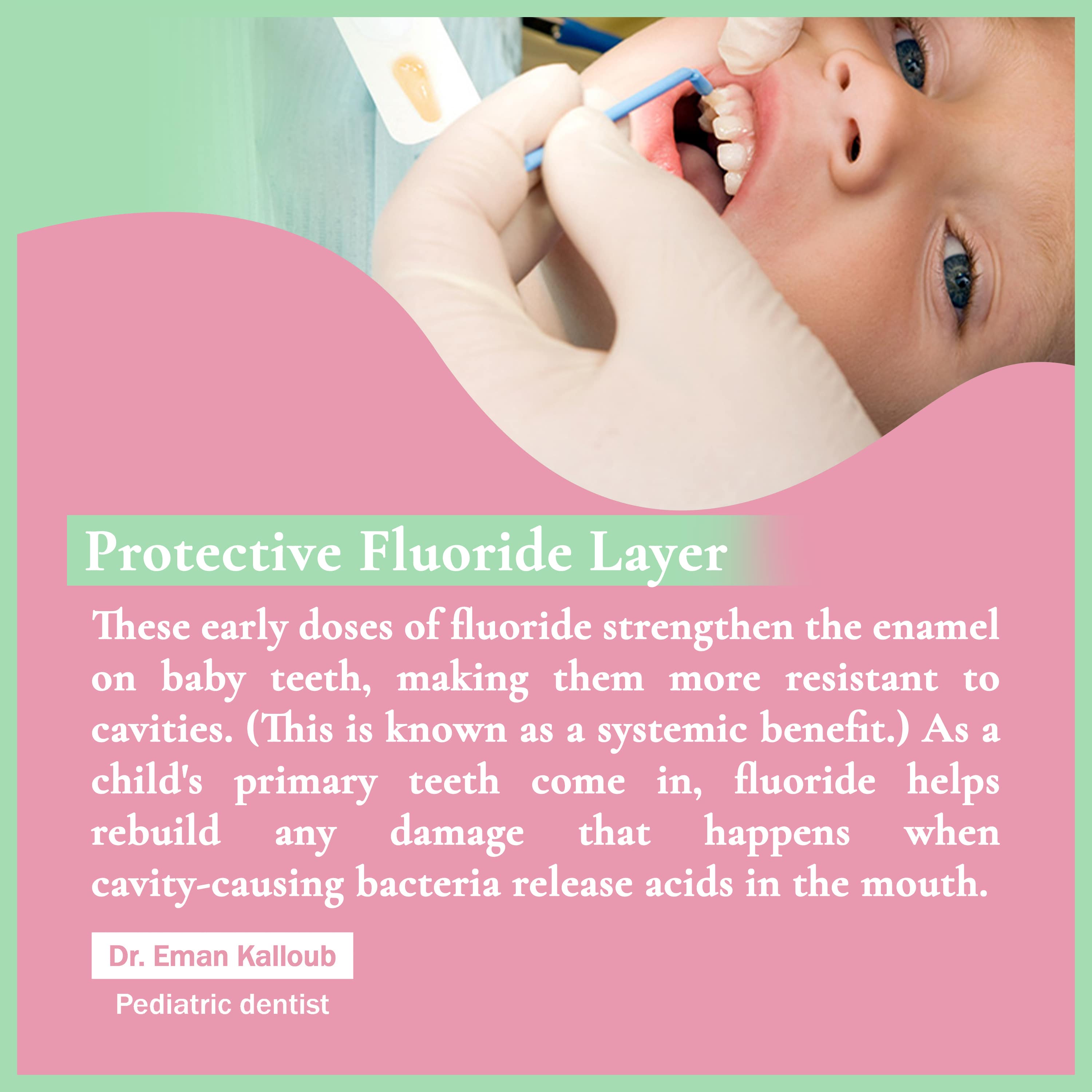
Fluoride is a natural mineral that strengthens tooth enamel and helps repair early stages of tooth decay. It works by remineralizing areas where acids have begun to dissolve enamel, effectively reversing early cavities before they need fillings. The American Academy of Pediatric Dentistry and the American Dental Association both recommend fluoride toothpaste for all children.
Rice-Sized Amount: Ages 0-3
For infants and toddlers under age 3, use a rice-sized smear of fluoride toothpaste. This tiny amount provides the protective benefits of fluoride while minimizing the risk of fluorosis, since young children cannot reliably spit out toothpaste. Brush twice daily — once in the morning and once before bed. Parents should do the brushing for this age group.
Pea-Sized Amount: Ages 3 and Up
Once a child can reliably spit out toothpaste (usually around age 3), increase the amount to a pea-sized dollop. Teach your child to spit out the toothpaste rather than swallowing it. Continue using a pea-sized amount until age 6, when they can transition to a standard strip of toothpaste on the brush.
Signs of Too Much Fluoride
Dental fluorosis appears as faint white lines, streaks, or spots on the teeth. In mild cases, it is barely noticeable. In severe cases, it can cause brown discoloration. Fluorosis only affects teeth that are still developing under the gums, so it is a concern for children under age 8. If you notice white spots on your child\'s teeth, consult a dentist.
Other Sources of Fluoride
In Dubai, tap water is generally not fluoridated, so toothpaste is the primary fluoride source for most children. Some bottled waters contain fluoride — check the label. If your child uses a fluoride mouthwash, factor that into their total fluoride intake. Your dentist may recommend professional fluoride treatments during checkups for additional protection.
Making Brushing Fun
Let your child choose their toothpaste flavor (strawberry, bubblegum, and mint are popular). Use a sticker chart to track twice-daily brushing. Brush together as a family — children learn by watching. For more personalized advice on fluoride and your child, book a consultation at our Dubai Healthcare City clinic.